USB Data Acquisition
USB Data Acquisition
USB data acquisition (USB DAQ) instruments provide a compact, portable, and easy-to-deploy solution for connecting sensors and signals directly to a PC or laptop via a standard USB interface. Unlike rack-mount LXI or GPIB-based systems, USB DAQ modules require no external power supply in many configurations and are immediately recognized by measurement software, making them well suited for field use, rapid prototyping, and small-scale laboratory measurements. They typically offer analog inputs, digital I/O, and counter/timer functions accessible through standard DAQ APIs and drivers compatible with NI LabVIEW, MATLAB, and Python.
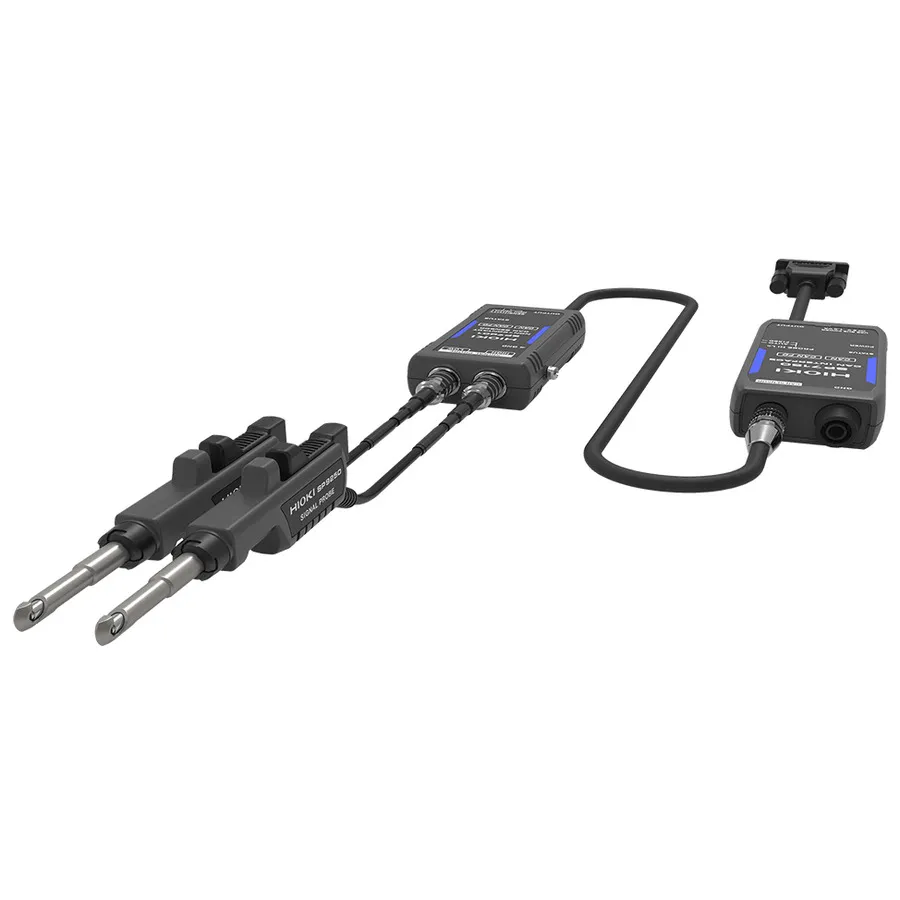
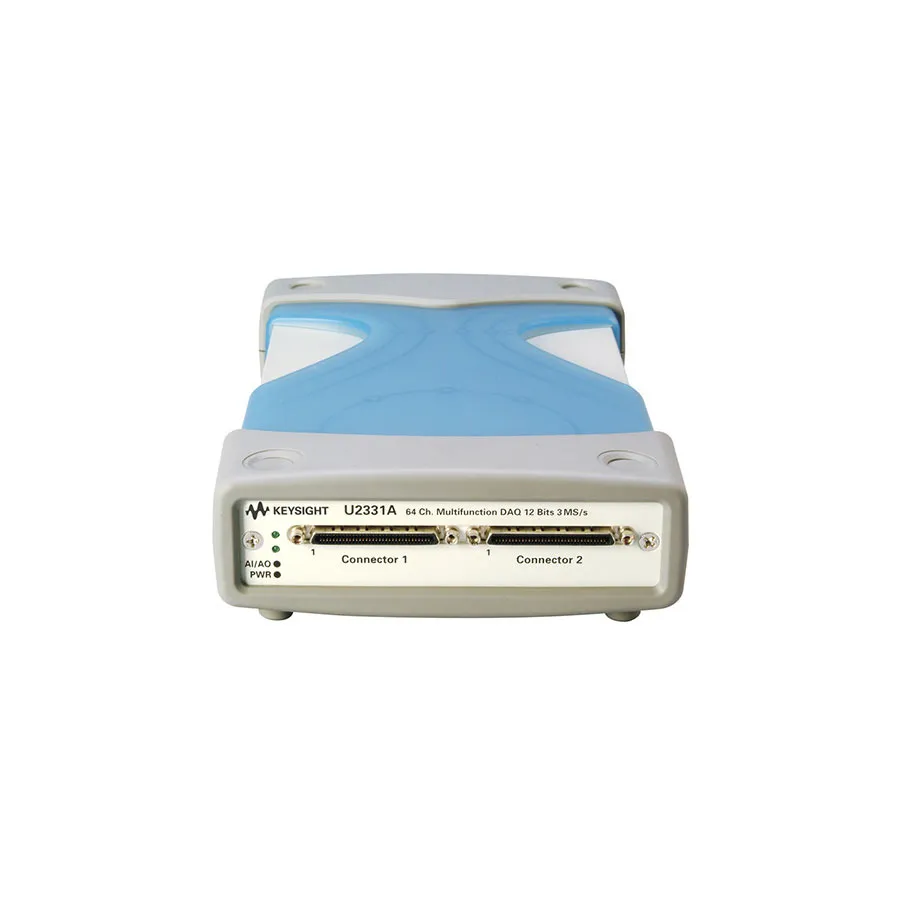
USB DAQ instruments are particularly suited to applications where portability and simplicity of deployment outweigh the need for very high channel counts or extreme sampling speeds. The Keysight U2331A, for example, offers up to 64 analog input channels at 3 MS/s in a compact USB form factor, while specialized interfaces such as the Hioki SP7001-95 enable non-contact CAN bus signal acquisition for automotive diagnostics and powertrain development.
Typical Applications
- Field data logging and remote sensor monitoring without rack infrastructure or external power
- Automotive CAN bus signal acquisition and real-time vehicle diagnostics
- Educational and university laboratory measurement setups requiring simple USB connectivity
- Rapid prototyping and proof-of-concept test systems in R&D environments
- Small-scale production testing where a full DAQ mainframe is not required
Popular Brands
Keysight offers the U2300A-series USB modular DAQ instruments with high channel counts and broad software compatibility. Hioki provides specialized USB sensor interfaces targeting CAN bus and power measurements in automotive applications. National Instruments (NI) USB-6000-series and Measurement Computing (MCC) USB DAQ devices are widely used in academic research and education, offering low-cost entry points with full software ecosystem support.